Voice latency
~1.25s
Reduced from roughly 2-3 seconds to a more natural conversational pace.
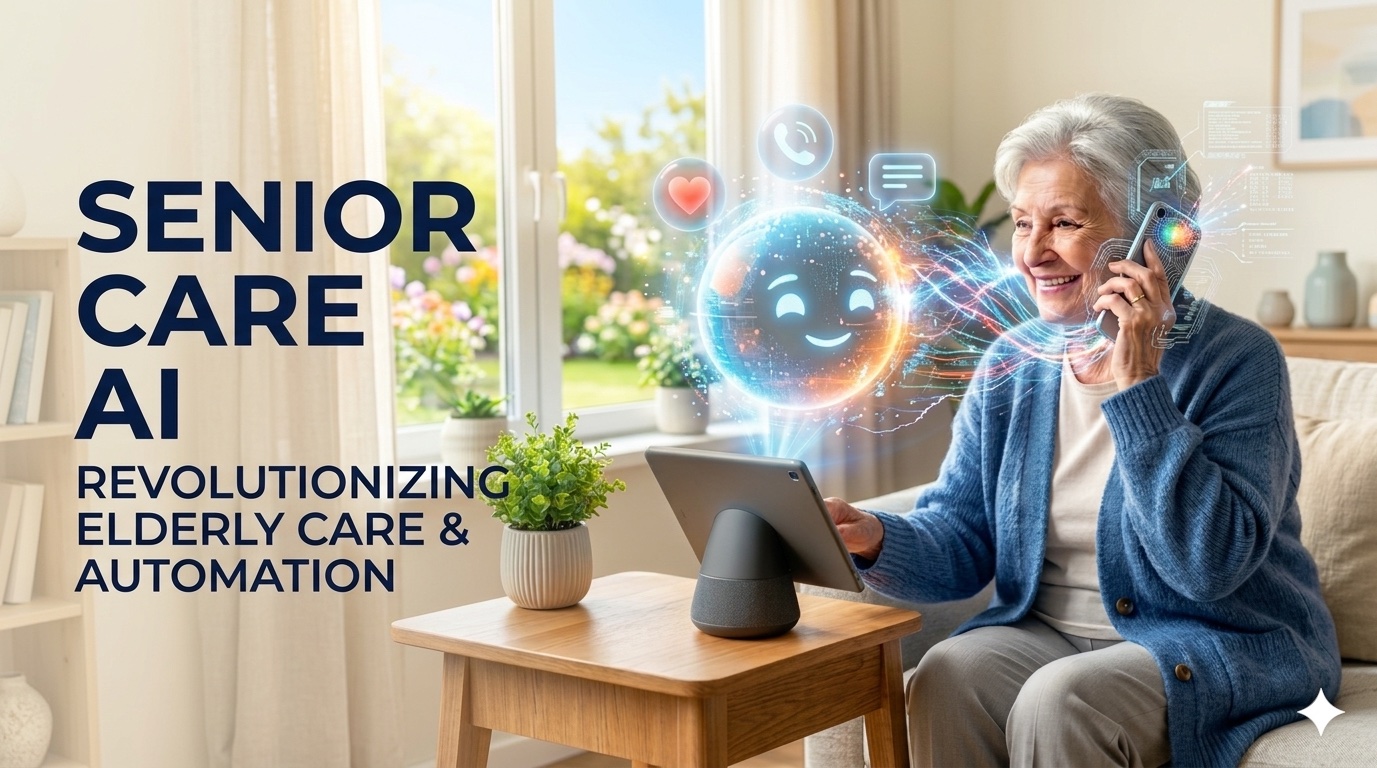
Senior Care AI transformed repetitive, high-volume care communication into a configurable service layer across phone, SMS, dashboards, and reports, helping agencies scale outreach without losing empathy, safety, or caregiver visibility.
Caregiver agencies needed a way to stay in touch with elderly clients consistently and safely at scale. Typical dashboards did not solve the last-mile communication problem, and manual outreach created gaps in responsiveness, consistency, and operational visibility.
The product was intentionally designed around operational workflow, not chatbot novelty. Agencies could configure care logic once, then let the platform generate, execute, interpret, and escalate communication automatically.
Define what to send, when to send it, through which channel, in which language, and what counts as a risk signal.
Create reminders, surveys, announcements, check-ins, follow-ups, and family reports from agency configuration.
Run Twilio voice calls, SMS messages, and AI-led conversations at the right time with no caregiver intervention.
Evaluate outcomes using task type, user profile, prior interactions, and escalation rules instead of raw events alone.
Route missed reminders, help requests, confusion, or distress to caregivers, coordinators, relatives, or multiple contacts.
Senior Care AI was structured as a focused set of services spanning caregiver workflows, telephony execution, AI companion orchestration, background job processing, and cost-conscious production deployment. The system balanced flexible conversational AI with deterministic care workflows through task context, prompts, escalation rules, and operational safeguards.
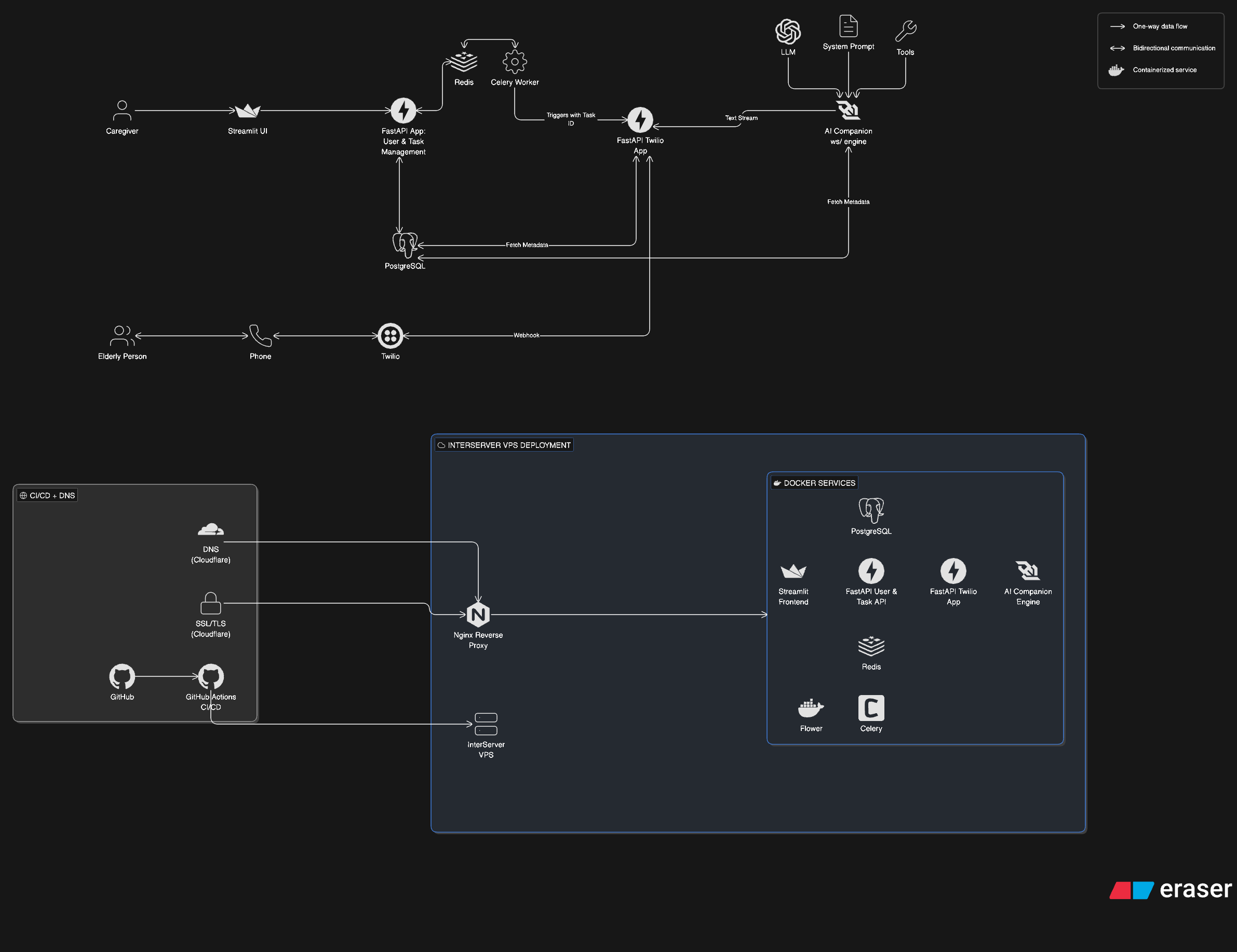
The platform's commercial value came from reflecting the messy realities of care operations rather than offering a one-size-fits-all reminder bot.
Supported one-time and recurring schedules, quiet hours, retries, fallback routes, and family-only notifications.
English and Spanish support, adjustable communication tone, and voice-first flows suitable for older adults.
Branching survey logic, incomplete handling, follow-up rules, and context-aware outcome interpretation.
Configurable frequency, duration, safe topics, and summaries for AI companion conversations.
Task history, completion state, retry outcomes, transcripts, relative notifications, and escalation reports.
Designed for agencies, coordinators, and managers who needed repeatable operations across many elderly users.
These sections are collapsible on purpose so the page stays scan-friendly for a first pass, while still holding enough depth for a client who wants to evaluate the technical and product thinking behind the build.
Challenge: Senior care outreach is repetitive, but not simplistic. The product needed to manage schedules, retries, escalation logic, transcript logging, family updates, and reporting in one operational flow.
Approach: The platform converted agency configuration into scheduled tasks, follow-ups, alerts, and reporting workflows, giving care teams one coordinated system for communication operations.
Result: Agencies gained a scalable communication layer that reduced manual admin work while preserving oversight and control.
Twilio call flows, backend webhooks, context loading, and streamed AI responses had to work together in real time for older adults who expect a calm, understandable phone interaction.
The system combined telephony control with context-aware AI companion behavior so reminder calls, inbound support, and check-ins could feel responsive without losing structure or safety.
Problem: Early voice latency of roughly 2-3 seconds made conversations feel less natural and risked reducing trust in the system.
Solution: A streaming-first interaction model reduced perceived delay and improved the cadence of AI-assisted conversations.
Outcome: Voice latency improved to around 1.25 seconds, materially improving usability and the perceived intelligence of the system.
The escalation system was built to be configurable rather than hardcoded. Agencies could define what qualified as a risk event, who should be notified, which channel to use, and when multi-recipient escalation paths should activate.
This allowed the same platform to support diverse operating styles without forking product logic for every client.
The product surfaced completed, pending, and missed tasks; transcript review; escalation severity; relative notification history; and dashboard-level communication trends.
That visibility made the system easier to trust, easier to audit, and easier to improve as agencies expanded adoption.
The product's value came from combining accessibility, operational rigor, low-latency voice, and configurable escalation into one platform that matched the real workflows of senior caregiver agencies.
I worked as the Lead AI Engineer, combining architecture leadership, product thinking, hands-on implementation, and delivery ownership across the full engagement.
The implementation favored pragmatic, production-oriented tools that supported real-time communication, background execution, and cost-conscious deployment.
Python, FastAPI, Twilio Voice and Messaging, PostgreSQL, SQLModel, Alembic, Celery, and Redis.
OpenAI, Anthropic, Together AI, prompt orchestration, and Deepgram ASR/TTS for voice interactions.
Docker Compose on an InterServer VPS with Nginx, Cloudflare DNS/SSL, GitHub Actions CI/CD, Streamlit, and Flower.
Senior Care AI turned manual care communication into a scalable service layer. The value was not just in adding AI, but in combining voice accessibility, operational structure, reporting, and safe escalation paths into a product that matched how real caregiver agencies work.